Focused use case #2

Multi-Framework ESG Reporting

Maintain ESG data once and reuse it for regulators, banks, customers, investors and rating agencies, instead of building a new dataset for every request.

TYPICAL ESG QUESTION

How do we answer every ESG request without collecting the same data again?

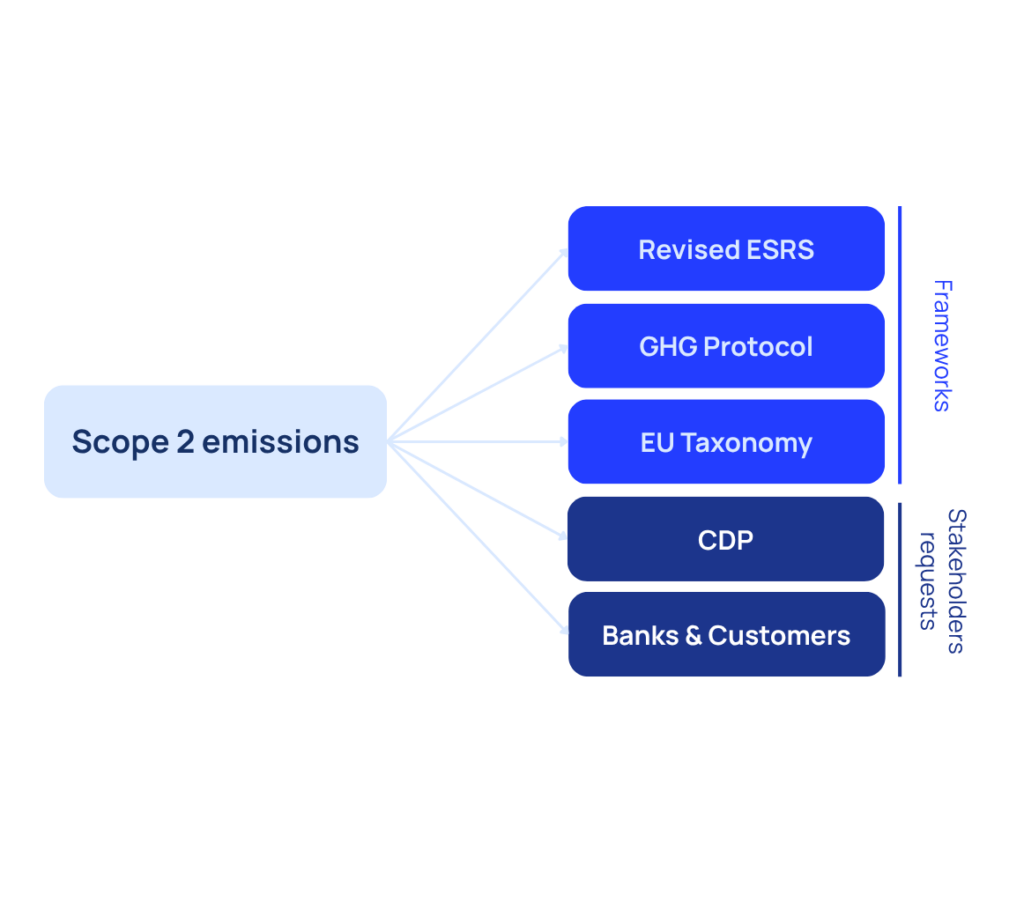
ESG reporting is no longer about one framework or one report. Requirements overlap, and one data model can support them all:

  • Regulatory reporting: Revised ESRS and the EU voluntary standard
  • Emissions and taxonomy: GHG Protocol and EU Taxonomy
  • Global standards: GRI and ISSB/IFRS S2
  • Stakeholder requests: CDP, EcoVadis, banks, customers and other stakeholders
MAINTAIN ONCE, REUSE EVERYWHERE

One data point, many reports

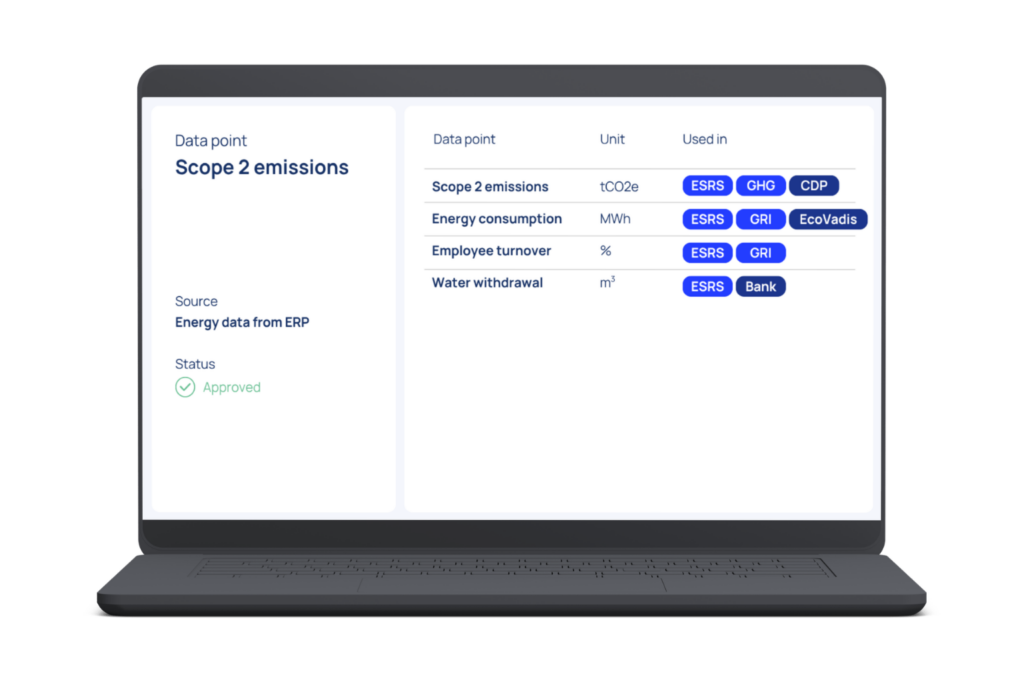
Instead of building separate datasets and processes for each framework, every data point is maintained once and reused wherever it’s needed. When a figure is updated, every report that uses it draws on the same updated value.

The result is consistent numbers, whether the request comes from a regulator, a bank or a customer.

BUILT TO EVOLVE

A data model that keeps up with new requirements

Regulations, standards and stakeholder expectations keep changing. You can create new data points yourself, without development, so the data model adapts as new requirements appear.

Business impact

How you benefit?

Spend less time rebuilding datasets and have more confidence that every report tells the same story.

  • Less duplication: Collect and maintain each data point once
  • Consistency: Report the same figures across every framework and stakeholder
  • Flexibility: Add new data points as requirements change, without development
Explore ESG & Sustainability Performance